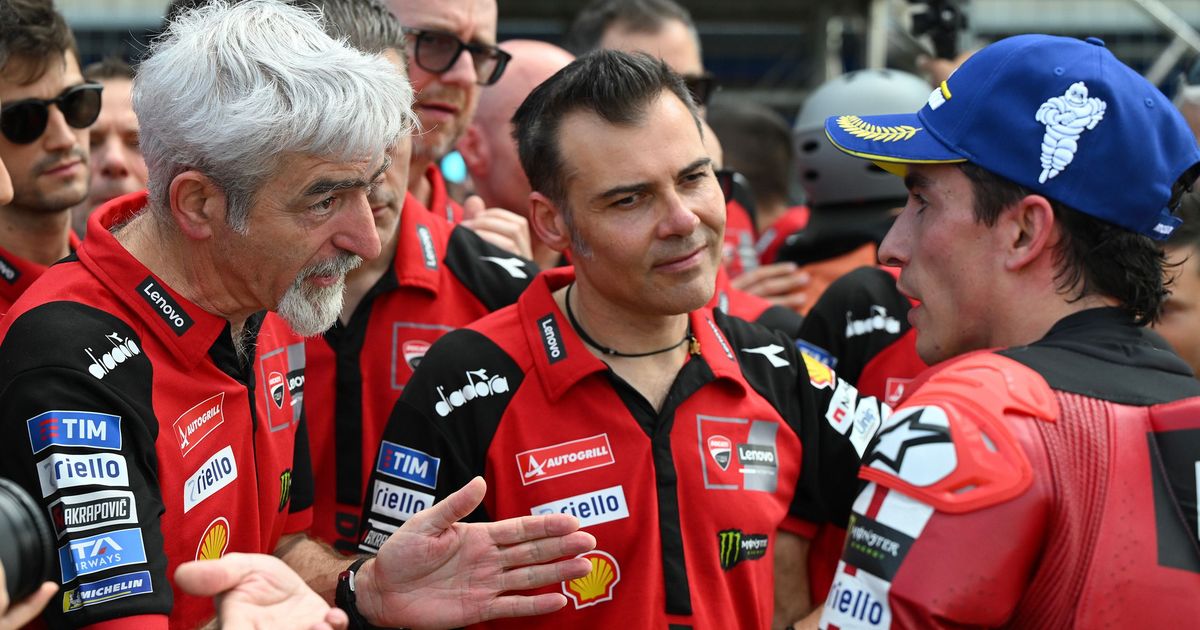
Acosta Claims Victory as Marquez Calls Penalty "Perfect Move"
The world of MotoGP was set ablaze by a thrilling, yet highly contentious, sprint race that saw rookie sensation Pedro Acosta clinch his maiden victory, albeit under dramatic circumstances. The win came after a late penalty handed to eight-time World Champion Marc Marquez following a last-lap incident that left fans and pundits debating the fine line between aggressive racing and an unfair advantage. This pivotal moment, a classic Acosta vs. Marquez confrontation, has redefined early season expectations and ignited fierce discussion about race stewarding in the premier class.
The tension was palpable from the outset, with riders pushing limits in the cut-throat sprint format. As the race neared its climax, the stage was set for a showdown between the seasoned veteran Marquez and the prodigious newcomer Acosta. It was on the penultimate lap, at the challenging Turn 12, that the defining move occurred – a bold maneuver by Marquez that initially seemed to secure him the top spot, only for it to be overturned by the stewards.
The Controversial Clash: Anatomy of the Penultimate Lap
The air was thick with anticipation as the sprint race thundered towards its conclusion. Fans had already been treated to a spectacle of high-speed duels and daring overtakes, but nothing quite prepared them for the drama that unfolded on the penultimate lap at Turn 12. Marc Marquez, renowned for his aggressive and often spectacular riding style, launched a daring divebomb on Pedro Acosta. The move was decisive, aiming to seize the lead, and initially appeared successful as Acosta visibly dropped back.
However, the maneuver immediately sparked controversy. While Marquez himself described it as a "perfect move," citing that his bike was already "half a bike in front" from the entry, the FIM MotoGP Stewards viewed it differently. Their official report cited "causing contact with another rider when overtaking and gaining unfair advantage through it, resulting in a position change." Both riders later confirmed there was indeed contact, a detail initially disputed by Ducati Lenovo Team Manager Davide Tardozzi but later acknowledged. This precise moment, where Marquez executed a sharp, lateral attack to gain position, encapsulates the term *acosta marquez strafe* – a sudden, aggressive move that alters the racing line and directly impacts the competitor. It’s these split-second decisions and their consequences that make MotoGP so captivating, yet also so prone to debate when the stewards intervene.
Marquez's "Perfect Move" – A Matter of Timing and Interpretation
Marc Marquez, ever the wily competitor, was left to reflect on a victory that slipped through his grasp due to a post-race penalty. His perspective on the incident was clear: while acknowledging "a small contact," he firmly believed the move itself was legitimate, a "perfect move" executed with precision and intent. His primary contention wasn't necessarily with the penalty's existence, but with its timing. Marquez argued, "The message arrives too late. Because it only arrived at the last corner. If they want to have this system, if they want to be more strict, they need to send the penalty on the exit of T3. Don’t wait until the last corner." This highlights a critical challenge in modern motorsport stewarding: how quickly and effectively can penalties be communicated and enforced in real-time, especially when they dictate the outcome of a race?
Marquez's frustration is understandable. To execute what he perceives as a winning maneuver, cross the finish line first, and then have that victory rescinded due to a penalty arriving at the final possible moment, is a bitter pill to swallow. His team manager, Davide Tardozzi, initially echoed the sentiment that the move was "unfair," though he later conceded that contact did occur. For Marquez, however, the incident merely fueled his competitive spirit, asserting, "I think already today the MotoGP fans understand the fire inside of me is there." This declaration promises more aggressive battles and thrilling racing from the Spaniard in subsequent rounds. The controversy surrounding this decision raises important questions about the consistency and transparency of stewarding, a topic further explored in our related article:
Marquez Penalty Explained: Inside the Acosta Sprint Incident.
Acosta's Maiden Victory: A Champion's Resolve
While the post-race discourse largely centered on Marquez's penalty, the ultimate beneficiary was Pedro Acosta, who secured his maiden MotoGP victory in what can only be described as an extraordinary debut. For the young Red Bull KTM Factory Racing rider, the win was a testament to his consistent performance and unwavering focus throughout the sprint. Acosta's reaction to the penalty was mature and pragmatic. He confessed, "After our contact on the final lap, I wasn’t really believing. I was trying because I was quite fast in T3 and T4 and I was making back what I was losing in T1 and T2." This illustrates his relentless pursuit, even when facing a seemingly insurmountable challenge against a rider of Marquez's caliber.
Acosta acknowledged that while he would "like to win the race battling for it," the crucial aspect is being in a position to capitalize on such events. This reflects a champion's mindset: it's not just about raw speed, but also about strategic positioning, managing the race, and staying within contention to benefit from any twist of fate. His ability to maintain pace and pressure on Marquez, despite the veteran's late braking and aggressive defending, speaks volumes about his talent. The initial contact, a high-stakes *acosta marquez strafe*, could have rattled a less experienced rider, but Acosta held his nerve. This victory marks a significant milestone in his MotoGP career, signaling his arrival as a serious contender and setting a compelling narrative for future encounters. It was a victory earned not just by speed, but by presence and perseverance.
The Impact on Race Dynamics and Future Encounters
The dramatic conclusion to the sprint race, characterized by the controversial penalty against Marc Marquez, carries significant implications for both rider strategy and the broader dynamics of MotoGP racing. For riders, the incident serves as a stark reminder of the evolving interpretation of "fair" contact by race stewards. While aggressive racing is often celebrated, the FIM's stance on "causing contact... and gaining unfair advantage" means riders must now calibrate their overtaking maneuvers with an even greater degree of precision, balancing the need for speed with the risk of sanction. This could lead to slightly more cautious approaches in the closing laps, or perhaps, paradoxically, more calculated risks when the stakes are highest.
For fans, such incidents add another layer of intrigue and anticipation. The "fire" Marquez spoke of, combined with Acosta's evident talent and cool demeanor, promises a thrilling rivalry for seasons to come. Every future *acosta marquez strafe* moment will be scrutinized, analyzed, and debated, fueling the sport's narrative. From a strategic perspective, teams and riders will undoubtedly review such decisions to better understand the limits of acceptable contact, potentially influencing training methods or even bike setup to handle close-quarters combat more effectively. Understanding these nuances is key for any MotoGP enthusiast. For a deeper dive into the immediate aftermath and the cost of Marquez's bold move, refer to our article:
The Last Lap Contact: How Marquez's Move Cost Him the Sprint. This controversial sprint has set a high bar for drama, ensuring that every future Acosta-Marquez battle will be unmissable.
The sprint race that culminated in Pedro Acosta's maiden victory and Marc Marquez's penalty will undoubtedly be remembered as a pivotal moment in the MotoGP season. It was a race that had everything: raw speed, daring overtakes, wheel-to-wheel combat, and a post-race twist that ignited passionate debate. While Marquez believes his move was "perfect" and only penalized due to late timing, Acosta humbly accepts his hard-fought win, acknowledging the need to be "there to get these things." This incident highlights the razor-thin margins in premier-class racing and the immense pressure on both riders and stewards. As the season progresses, fans can surely expect more electrifying battles, more tactical "acosta marquez strafe" moments, and continued discussion around the fine art of aggressive, yet fair, competition. The stage is set for an epic season, with these two formidable talents at its heart.