The Last Lap Contact: How Marquez's Move Cost Him the Sprint
In the high-octane world of MotoGP, where milliseconds separate victory from defeat, controversies are as integral to the narrative as the breathtaking speed itself. Few incidents encapsulate this better than the thrilling yet contentious Marquez Penalty Explained: Inside the Acosta Sprint Incident from a recent Sprint race. What began as a masterful display of aggressive riding by Marc Marquez, culminating in a last-gasp overtake, quickly devolved into a heated debate following a steward's decision that handed victory to a deserving Pedro Acosta. The core of the uproar? A late-race contact, dubbed by many as the Acosta Marquez strafe, that saw one champion lose a win and another claim a maiden triumph.
This incident wasn't just a fleeting moment; it was a microcosm of MotoGP's fierce competition, the razor-thin margins of legality, and the enduring human element of judgment under pressure. It pitted a seasoned veteran, renowned for his daring moves, against a rising star hungry for his first taste of glory. The repercussions extended beyond the podium, sparking conversations about race stewarding, rider ethics, and the very definition of "fair play" in the world's premier motorcycle racing series. Let's delve into the intricate details of how a single aggressive move redefined the outcome of an unforgettable sprint.
The Defining Moment: Penultimate Lap Drama at Turn 12
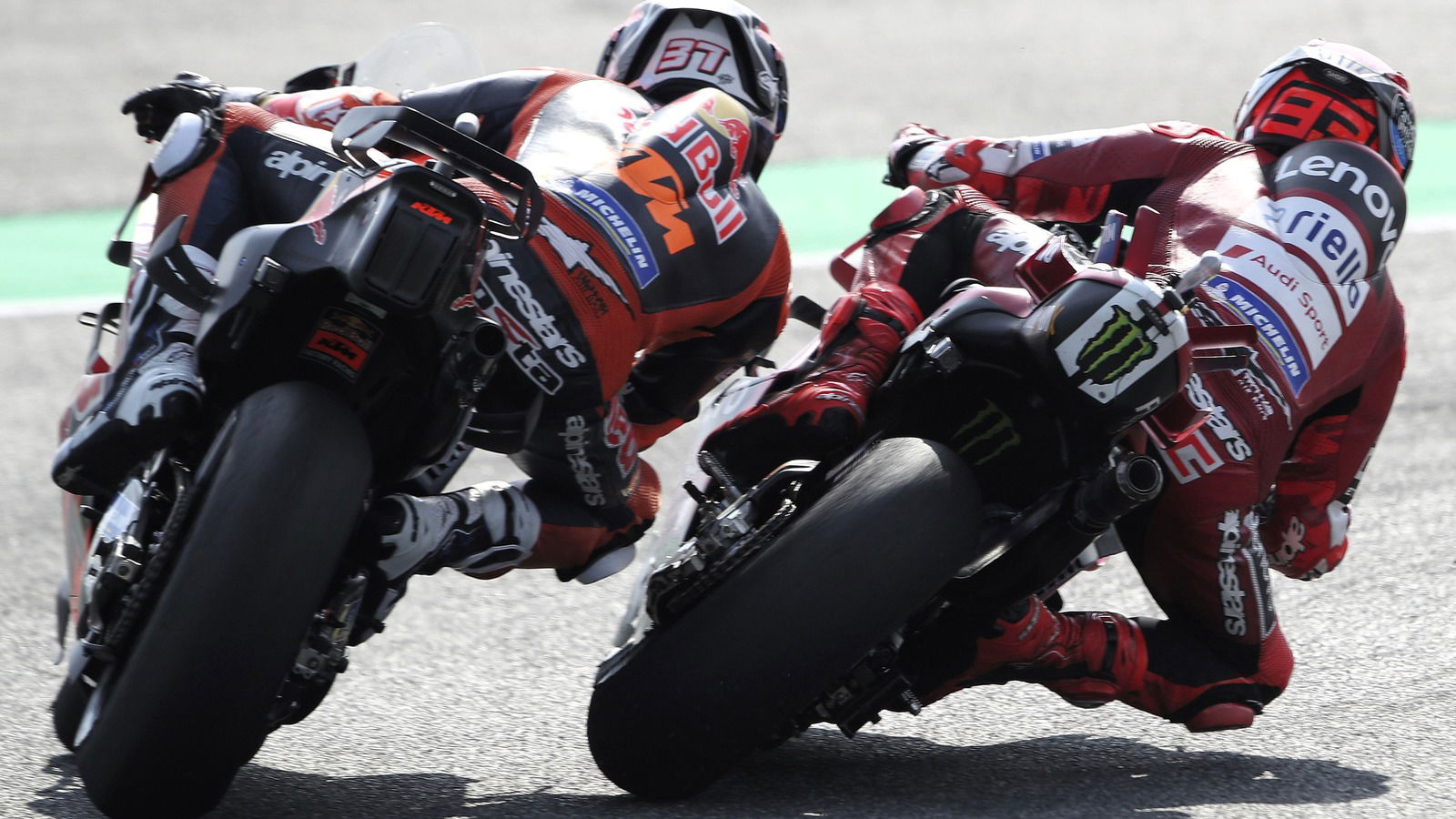
The stage was set for an epic finish during the Buriram Sprint. Fans were on the edge of their seats, having already witnessed a display of relentless battling. As the race entered its penultimate lap, the tension was palpable, focusing squarely on the duel between Marc Marquez and Pedro Acosta. It was at Turn 12, a critical corner, where the defining moment of the Sprint unfolded. Marquez, known for his audacious braking and surgical precision, launched a characteristic divebomb maneuver on Acosta.
The overtake was executed with Marquez’s bike already half a length ahead, a testament to his incredible late braking. However, the move was accompanied by contact. Initially, there was some ambiguity, with Ducati Lenovo Team Manager Davide Tardozzi reportedly vocal about the absence of contact. Yet, both riders, the protagonists of the drama, subsequently confirmed that a "small contact" did occur. This subtle yet significant detail was crucial to the stewards' later ruling.
The FIM MotoGP Stewards, after reviewing the incident from multiple angles, issued a penalty to Marquez. Their official report cited: "causing contact with another rider when overtaking and gaining unfair advantage through it, resulting in a position change." This verdict was the turning point, transforming a seemingly victorious overtake into a penalty-induced defeat. The incident highlighted the fine line riders walk between aggressive, race-winning moves and those deemed to cross the line into gaining an "unfair advantage." For many, the Acosta Marquez strafe became shorthand for this controversial yet thrilling maneuver.
Two Perspectives: Marquez's "Perfect Move" vs. Acosta's Gracious Victory
The aftermath of the penalty saw both riders offer their perspectives, each shedding light on the intensity of the moment and their contrasting philosophies. Marc Marquez, ever the wily competitor, expressed his belief that the penalized move was nothing short of "perfect." He acknowledged the contact, stating, "There was a contact. A small contact. But my bike was already half a bike in front, already from the entry." His primary contention, however, wasn't about the legitimacy of the contact, but the timing of the penalty itself.
Marquez argued vehemently that the notification arrived "too late." "If they want to have this system, if they want to be more strict, they need to send the penalty on the exit of T3. Don’t wait until the last corner," he stated, highlighting the impracticality of having to concede a position within the final meters of a race. Despite the outcome, Marquez's competitive spirit remained undimmed. He declared, "I think already today the MotoGP fans understand the fire inside of me is there," promising more fireworks in future races. For him, the divebomb, even with contact, was a legitimate, aggressive racing move that ultimately demonstrated his unwavering hunger for victory.
On the other side of the garage, Pedro Acosta, the recipient of Marquez's aggressive pass and the ultimate beneficiary of the penalty, displayed a blend of humility and satisfaction. "After our contact on the final lap, I wasn’t really believing," Acosta admitted, describing his relentless pursuit despite the setback. He continued to push, making up time in Turns 3 and 4, even while losing out in the earlier sections. While acknowledging he'd "like to win the race battling for it," Acosta also pragmatically stated, "you have to be there to get these things..." His maiden MotoGP sprint victory, while coming under contentious circumstances, was a testament to his consistent performance and ability to remain in contention until the very end. The incident, and the resulting penalty, ensured that Acosta Claims Victory as Marquez Calls Penalty "Perfect Move" would become a headline defining a pivotal moment in both riders' careers.
The Stewards' Dilemma: Strictness, Timing, and the Grey Areas of Racing
The controversy surrounding the Acosta Marquez strafe thrust the FIM MotoGP Stewards' panel into the spotlight, igniting a broader discussion about the application of racing rules. Marquez's strong criticism regarding the timing of the penalty—delivered only at the final corner—underscores a genuine dilemma for race control. If the objective is to ensure fair play, is a last-minute notification truly effective, or does it merely disrupt the race without offering sufficient time for a rider to reasonably comply? Marquez's argument suggests that earlier notification could allow for a less chaotic resolution, perhaps even a chance for the penalized rider to fight back for the lost position within the remaining laps.
The stewards operate in a complex environment where split-second decisions must be made under immense scrutiny. Their role is to interpret the rulebook, which prohibits "causing contact with another rider when overtaking and gaining unfair advantage through it." The definition of "unfair advantage" often resides in a grey area, necessitating careful judgment. Was the contact minimal enough to be considered a 'racing incident'? Or did it genuinely impede Acosta, forcing him to lose significant time and a position he might otherwise have held?
Tips for Riders and Fans:
- For Riders: Understanding the nuances of the rulebook, especially regarding contact and gaining advantage, is paramount. Riders must constantly evaluate the risks and rewards of aggressive overtakes, knowing that stewards are increasingly strict. Developing a keen awareness of race control communications is also vital; while timing can be an issue, staying informed is critical.
- For Fans: Appreciating the complexity of stewarding decisions adds another layer to enjoying the sport. It's easy to take sides, but recognizing the difficulty of making fair calls in real-time, often with limited angles and seconds to decide, fosters a deeper understanding of race management. Debates like the Acosta Marquez strafe serve as important learning points for both participants and observers.
The incident highlighted the ongoing challenge of balancing the desire for thrilling, aggressive racing with the need for fairness and rider safety. As MotoGP continues to evolve, so too must the mechanisms of race control, striving for clarity, consistency, and timely decision-making to minimize controversy and maximize the purity of the competition.
Beyond the Penalty: What This Means for the Championship and Rivalries
While the immediate focus was on the penalty and the swapped podium positions, the Acosta Marquez strafe also carried significant implications for the broader championship narrative and the burgeoning rivalries within MotoGP. For Pedro Acosta, this controversial victory marked a monumental milestone. It was his maiden MotoGP sprint win, a powerful statement in his debut season that he is not just a promising talent but a bona fide race winner. This kind of early success can be a massive confidence booster, setting the tone for a potentially stellar career and positioning him as a strong contender for future championships. It validates his raw speed and his ability to stay in the mix, even under extreme pressure.
For Marc Marquez, despite the loss of a win, the incident underscored his enduring competitive fire and his relentless pursuit of victory. Finishing second after a penalty still demonstrates exceptional pace and a refusal to back down. His defiant remarks about the "fire inside of me" resonate with fans who admire his uncompromising approach to racing. This incident, rather than diminishing his stature, perhaps solidified his image as a fierce competitor willing to push every boundary. It also served as a clear message to his rivals that the multi-time world champion is far from content with merely participating; he's here to win, by any means necessary.
Crucially, this clash sets the stage for what could become one of MotoGP's most exciting rivalries. The veteran master and the audacious rookie, both immensely talented and driven, have now shared a deeply personal and controversial moment on track. Future encounters between Acosta and Marquez are almost guaranteed to be filled with an extra layer of tension and expectation. Fans will be eagerly watching for a "Take 2" as Acosta put it, to see how their on-track relationship evolves. This single, aggressive move, the Acosta Marquez strafe, has etched itself into the annals of MotoGP history, not just as a contentious penalty, but as the spark that ignited a thrilling new chapter in the sport's competitive landscape.
Conclusion
The last lap contact between Marc Marquez and Pedro Acosta at the Buriram Sprint was more than just a racing incident; it was a compelling blend of aggressive talent, controversial stewarding, and the intense drama that defines MotoGP. Marquez's audacious "perfect move" on Acosta, ultimately penalized as the Acosta Marquez strafe due to contact and unfair advantage, highlighted the razor-thin margin between a race-winning maneuver and a rule infringement. While Marquez lamented the late timing of the penalty, Acosta graciously accepted his maiden sprint victory, acknowledging the fortune that sometimes accompanies relentless effort. This incident not only reshaped the podium but also fueled ongoing debates about the consistency of race control and the fine line riders must tread. Ultimately, it cemented Acosta's arrival as a formidable force and reaffirmed Marquez's unyielding drive, setting the stage for what promises to be an electrifying rivalry for seasons to come. It serves as a stark reminder that in MotoGP, every decision, every move, can alter destiny.